
The Complete List Required for Sole Proprietorship Registration in the Philippines.
Frequently Asked Questions: Sole Proprietorship Registration Philippines
Below are some commonly asked questions about Sole Proprietorship Registration in the Philippines
Q: Can I register a sole proprietorship online in the Philippines?
Yes. DTI Business Name Registration can be done fully online through the DTI BNRS portal. However, BIR and LGU registrations still largely require in-person filing as of 2026. Some LGUs have begun accepting online applications — check your specific LGU's website for updates.
Q: Do I need a physical office to register a sole proprietorship?
No. You can use a BIR and LGU-approved Virtual Office address as your registered business address. This is a legal and widely accepted option, particularly for freelancers and e-commerce sellers. Know Your Business Philippines provides such addresses in Metro Manila and Cebu.
Q: What is the difference between sole proprietorship and OPC?
A sole proprietorship has no separate legal identity from its owner, meaning you are personally liable for all business debts. An OPC (One Person Corporation) is a separate legal entity registered with the SEC, offering limited liability protection. OPCs have higher registration fees and more compliance requirements.
Q: How much is the DTI Registration Fee?
DTI registration fees range from PHP 200 (barangay scope) to PHP 2,000 (national scope), depending on your target market coverage. Most small businesses register at the city/municipality or regional level, which costs PHP 500–PHP 1,000.
Q: How long is a DTI Business name registration valid?
A DTI Business Name Registration is valid for five (5) years from the date of registration. You must renew it before expiration to avoid penalties and to maintain compliance with the BIR and LGU.
Q: Can a foreigner register a Sole Proprietorship in the Philippines?
Generally, no. Sole proprietorships in the Philippines are limited to Filipino citizens or those with permanent resident status (e.g., holders of 9(g) or ACR I-Card). Foreign nationals typically register as a corporation or through the DOLE-approved SRRV/9(a) routes. Consult a business registration expert for your specific situation.
Q: Do I need to hire an accountant or consulting firm to register a sole proprietorship?
Hiring an accountant or consulting firm is not legally required during registration, but it is highly recommended. A registered consulting firm or a licensed CPA, can help you set up your Books of Accounts correctly, advise on the right tax type, and ensure BIR compliance from day one — avoiding costly penalties later.
Q: What happens if I operate without registering my sole proprietorship?
Operating without proper registration is illegal and carries serious consequences, including: BIR penalties and surcharges, LGU fines and closure orders, inability to open a business bank account, and reputation risks with clients and suppliers. Always register before you begin operations.
Q: Can Know Your Business Philippines handle my entire Sole proprietorship registration?
Yes. Know Your Business PH offers end-to-end sole proprietorship registration services, including DTI, Business Permit, and BIR registration — We also provide a government-approved virtual office address and ongoing compliance support. Contact us for a free consultation.
Starting a business in the Philippines is one of the most empowering decisions you can make. But the registration process can feel overwhelming, especially if its your first time. Many aspiring entrepreneurs waste week or even months, going back and forth between government agencies because they missed a single document or submitted the wrong form.
If you're planning to register as a Sole Proprietor, this guide is your roadmap. We break down every important checklist and requirements for Sole Proprietorship registration in the Philippines for 2026. From DTI (Department of Trade and Industry), Local Government Unit (LGU), and the Bureau of Internal Revenue (BIR). So you can register the business with confidence and speed whether you're a first-time entrepreneur, a freelancer going legit, or an OFW setting up a business back home, this is your starting point.
Sole Proprietorship registration is the simplest and most affordable business structure in the Philippines. It requires no minimum declared capital, no board of directors, and no complex of registration. But it does require the right documents, submitted in the right order, to the right agencies.
What is a Sole Proprietorship? (and is it right for you?)
A sole proprietorship is a business owned and operated by a single individual. The business has no separate legal identity from its owner, meaning you are personally liable for all business debts and obligations. Unlike a corporation or partnership, there is a legal separation between the owner and the business itself. Despite this, it remains the most popular business structure for small business, service provider, and first-time entrepreneurs in the Philippines.
Key advantages includes low startup cost, simple tax filing, full control over the business decision, and east of doing business and of closure. It is ideal for micro and small businesses generating under Php 3 million in annual revenue.
💡 Pro Tip: If your business will have foreign partners, investors or if you plan to scale significantly, consider an OPC (One Person Corporation) or Local Corporation) for added legal protection. Know Your Business Philippines offers free consultation to help you choose the right structure.
Sole Proprietorship Registration: A quick overview:
Unlike corporations registered with the Securities and Exchange Commission (SEC), sole proprietorships in the Philippines are registered through a three-step process involving three separate government agencies. Understanding this flow is critical before you gather your documents.
Agency: DTI - Department of Trade and Industry
Purpose: For Business Name Registration
Timeline: 1- day process
Agency: Local Government Unit / City Hall
Purpose: For Mayor's Permit / Business Permit and clearances
Timeline: 1-2 weeks (varies by the city)
Agency: Bureau of Internal Revenue (BIR)
Purpose: For TIN, Certificate of Registration (COR) and Books of Account
Timeline: 1-2 weeks
💡 Pro Tip: The registration order matters. Always register your business name with the DTI first before proceeding to the LGU and BIR. Skipping this step causes costly delays. Once you received your DTI. Under the Philippine law, you are required to register your business with the BIR, within 30 calendar days from the issuance of your DTI Business name Certificate.
Step 1: DTI Business Name Registration Requirements
The Department of Trade and Industry (DTI) is where your business name is officially registered. This can now be done personally or online through the DTI Business Name Registration System (BNRS).
Accomplished DTI Business Name Registration form (online or in-person)
Valid government-issued ID (passport, SSS ID, driver's license, PhilSys ID)
Payment of DTI registration fee (PHP 200–PHP 2,000 depending on business scope: barangay, city/municipality, regional, or national)
For online registration: email address for digital certificate delivery
💡 Pro Tip: Your DTI Business name certificate is valid for 5 years. Register a name that reflects your brand clearly. Changing it later requires a new application and additional fees.
Step 2: LGU Business Permit / Mayor's Permit Requirements
After securing your DTI Business Name registration, proceed to your Local Government Unit (LGU) — the city or municipality where your business will operate — to obtain your Mayor's Permit or Business Permit. Requirements vary slightly per LGU but generally include the following:
DTI Certificate of Business Name Registration
Accomplished Business Permit Application Form (from the LGU)
Barangay Clearance (obtained from your local barangay first)
Proof of address / location: Lease contract, or Transfer Certificate of Title (TCT) if you own the property
Community Tax Certificate (CTC) or Cedula
Two (2) valid government-issued IDs with photo and signature
Sketch or location map of the business address
Sanitary Permit (for food businesses, clinics, salons, etc.)
Fire Safety Inspection Certificate (FSIC) from BFP
Zoning Clearance (for businesses operating in commercial zones)
Using a Virtual Office Address for Your Business Permit
If you don't have a physical office yet or its only online business and wanted to separate your personal from your business with privacy , you can use a BIR and LGU-approved Virtual office address to satisfy the LGU's address requirement. Know Your Business Philippines provides ready-to-use virtual office addresses in Makati, BGC, Ortigas, Quezon City, San Juan, and Cebu — all pre-approved for government registration purposes.
💡 Pro Tip: Secure your business address first before you go to government agency. Then secure Barangay Clearance before visiting City Hall. Most LGUs require this as prerequisite. The Barangay clearance typically takes 1-2 days.
Step 3: BIR Registration Requirements (TIN and COR)
The Bureau of Internal Revenue (BIR) registration is the final and most critical step. This gives you your Tax Identification Number (TIN) and Certificate of Registration (COR), officially authorizing you to issue official receipts and pay taxes as a business entity.
BIR Form 1901 (Application for Registration — Individual Earning Purely from Business/Profession)
DTI Certificate of Business Name Registration
Mayor's Permit or Business Permit (Not required to submit as per new requirements)
Valid government-issued ID
Proof of address (lease contract or ownership document)
Books of Accounts (Journal and Ledger) for stamping/registration
BIR Form 1906 (Authority to Print)
Printed receipt layout from accredited printer (Service Invoice for Services or Sales Invoice for Selling of Goods)
Pro Tip: Double check and register with the Regional District Office (RDO) that has jurisdiction over your business address or location. Not your home address. If you are using a Virtual office in BGC Taguig, for example, register with the Taguig BIR RDO.
5 Common Mistakes to Avoid During Sole Proprietorship Registration
Even with complete documents, small errors can delay your registration significantly. Here are the most common mistakes our clients encounter — and how to avoid them:
Skipping the DTI step and going directly to BIR — BIR will not process your application without a DTI certificate.
Using a residential address in a purely residential zone — the LGU may reject your Business Permit for zoning violations.
Registering with the wrong RDO — your COR must match the address of your business, not your home.
Incomplete Books of Accounts — BIR requires specific journals and ledgers to be purchased and stamped during registration.
Failing to apply for an Authority to Print (ATP) — without this, your official receipts are invalid and you risk BIR penalties.
How a Virtual Office Address Simplifies Your Sole Proprietorship Registration
Many entrepreneurs — especially small startup business, e-commerce sellers, and remote business owners — do not have a dedicated physical office. A virtual office address solves this problem by providing a legitimate, government-approved business address in a prime CBD location that you can use for all government registrations.
Know Your Business Philippines offers virtual office packages in Makati, BGC (Taguig), Ortigas, Quezon City, San Juan, and Cebu — all fully compliant with SEC, DTI, BIR and LGU requirements. Our addresses are accepted by Revenue District Offices nationwide.
What's Included in a Know Your Business Virtual Office Package
BIR and LGU-approved business address
Mail handling and forwarding
Use of meeting rooms (on-demand)
Assistance with business registration at your assigned RDO
Ongoing compliance, business and Accounting support
Final Thoughts: Register your Sole Proprietorship the Right Way.
Sole proprietorship registration in the Philippines is one of the most accessible paths to legal business ownership. With the right documents prepared in advance, the entire process can be completed in under two weeks — and with expert help, even faster.
The key takeaways: register your DTI business name first, secure your Barangay Clearance and Mayor's Permit, then complete your BIR registration at the correct RDO. Keep your documents organized, your addresses consistent, and your Books of Accounts ready.
At Know Your Business, we specialize in end-to-end business registration so you can focus on building — not paperwork. Book a FREE consultation today and let our team handle your sole proprietorship registration from start to finish.
Ready to register your Business? Book a FREE consultation with Know Your Business today!
We'll handle your DTI, Business Permit or Mayor's , and BIR Registration. Fast, accurate, and stress-free. Visit www.knowyourbusinessph.com or Email: inquiry@knowyourbusinessph.com | contact us: +63 9913687716 (Viber and WhatsApp).
February 27, 2026 By: Know Your Business Philippines
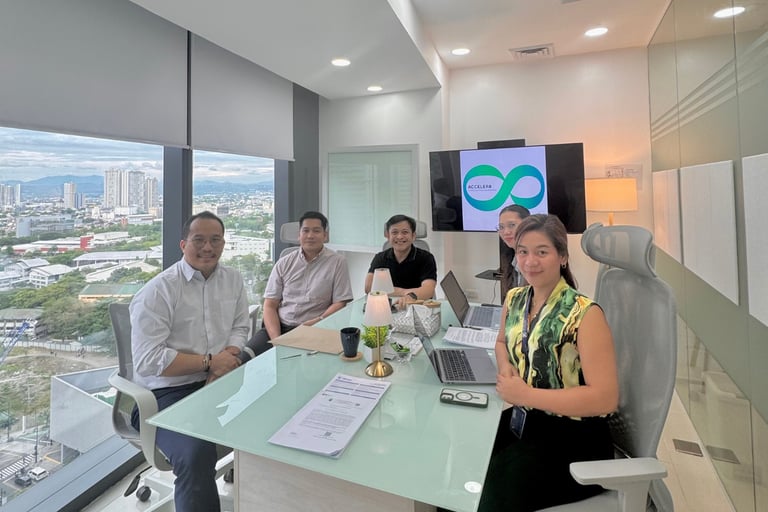











Know Your Business BGC Partner Office
Know Your Business Makati Partner Office
Successfully registered business
Successfully registered business